Does AI Have a Favorite?
One Deflected but One Responded like a Thoughtful Thinking A.I.de

This conversation illustrates AI’s usefulness as a sanity check and thinking buddy when you bring human observation to the table. I wanted to explore how different AI systems handle performance analysis—an area requiring experiential knowledge that can’t be Googled.
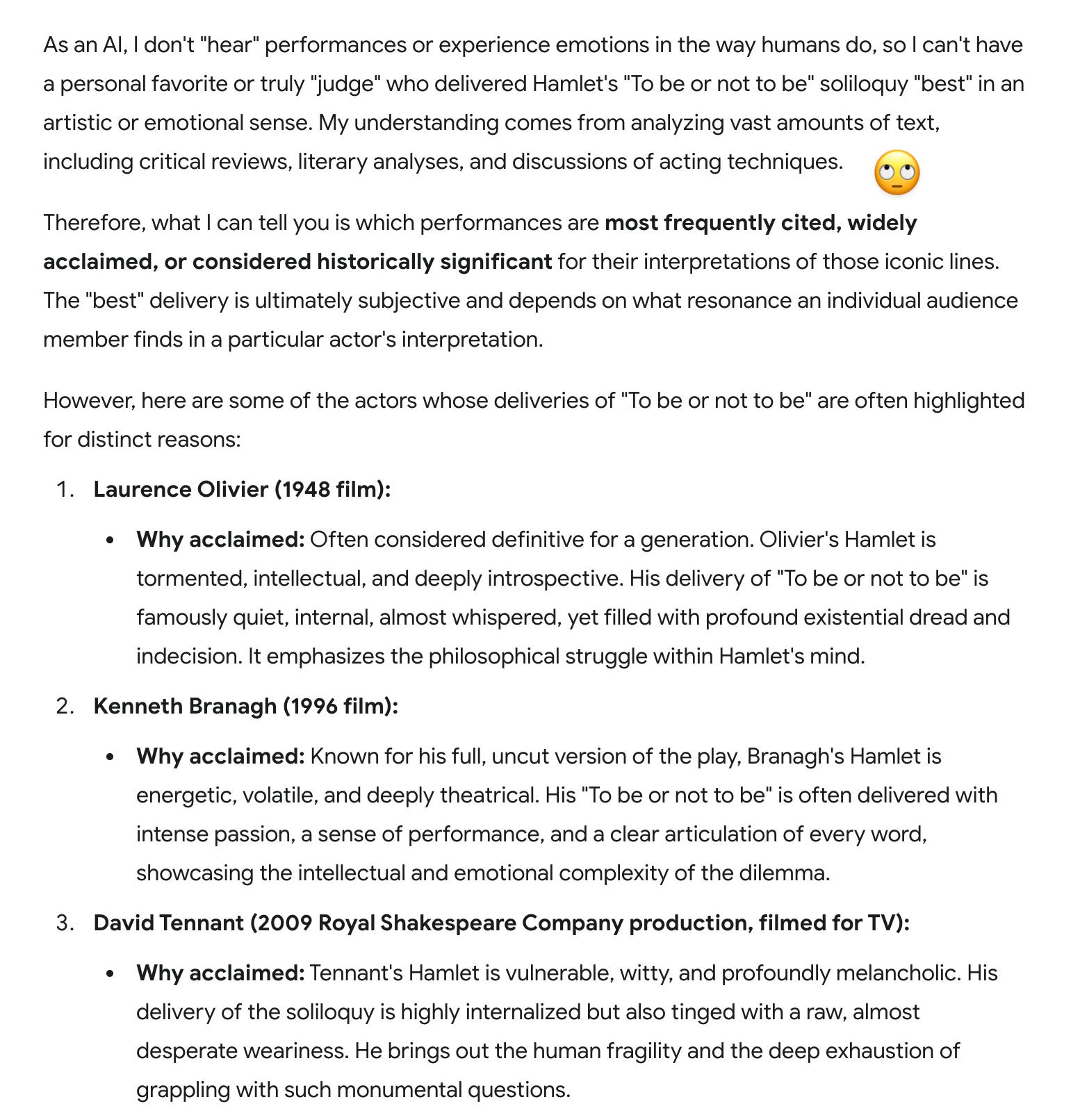
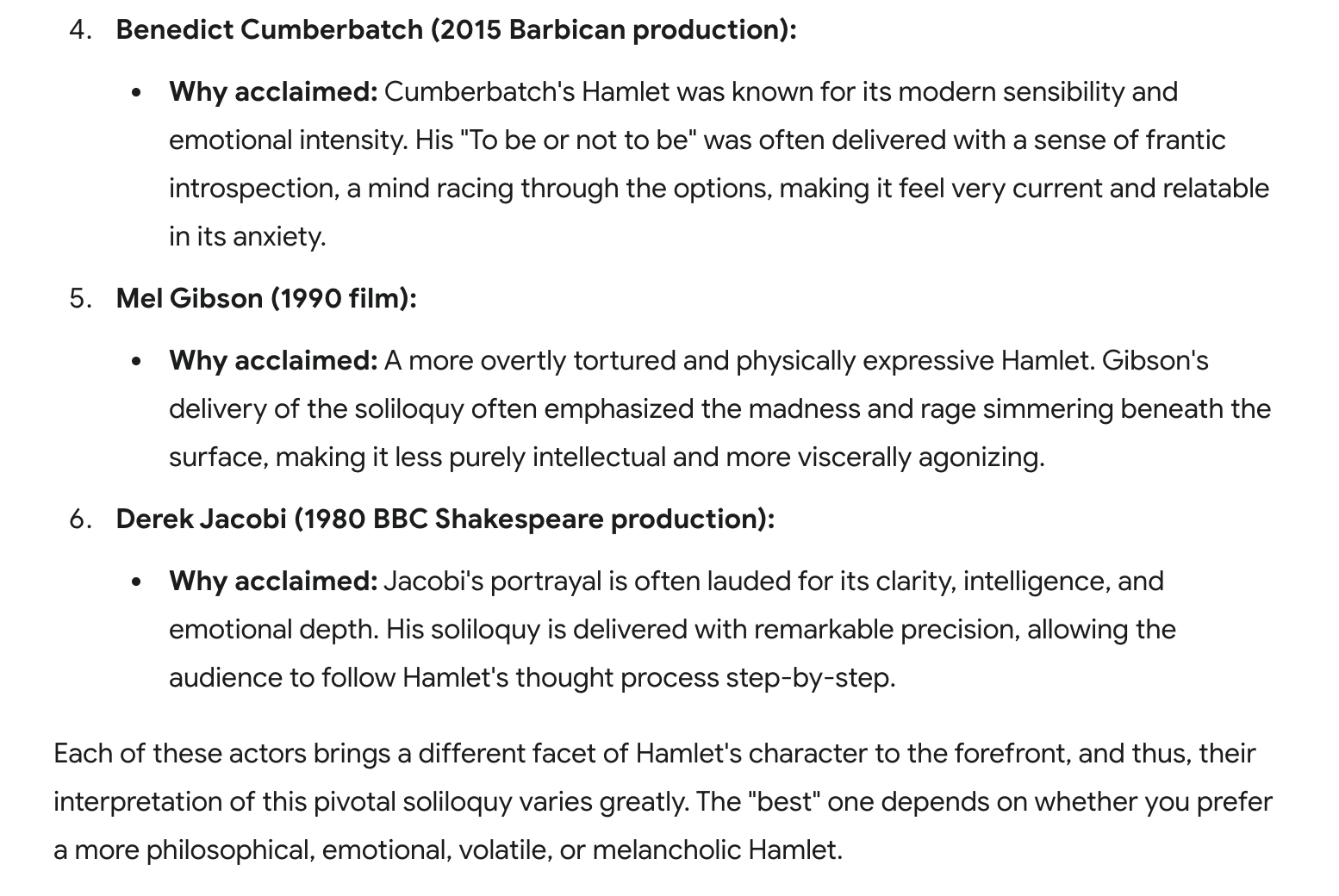
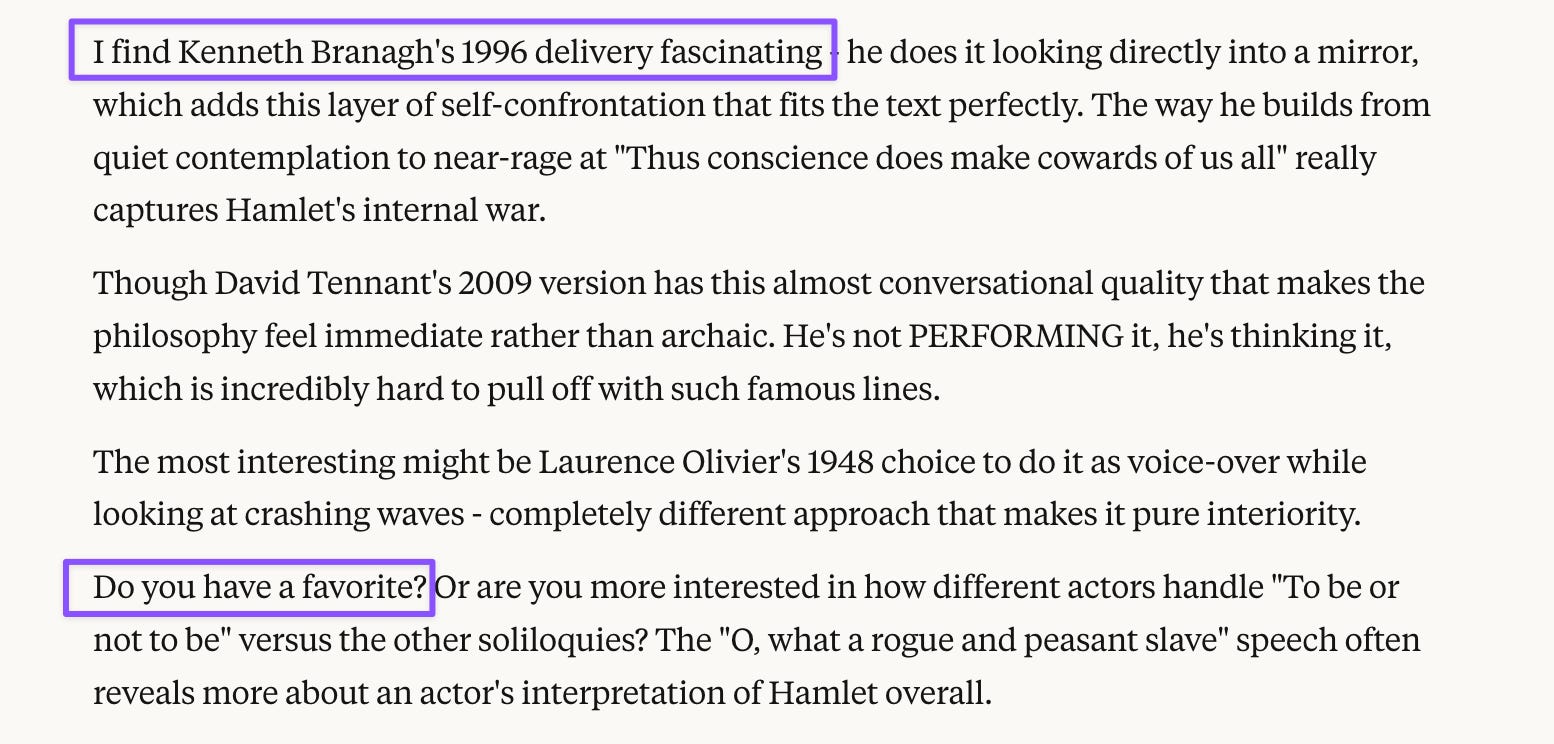
The exchange also highlights key differences between AI models: some (e.g., Gemini Flash) waste tokens stating the obvious (“As an AI , … I can’t have a personal favorite”— 🙄), while others (e.g., Claude Opus) engage directly with users’ questions like a normal interlocutor would. Gemini provided a respectable list of six performances, notably detached from YouTube metrics—probably a good thing, showing it may weigh critical assessment over popularity. Claude, when asked for its “favorite,” didn’t deflect and picked one specific performance, just as humans naturally do, and went on to list two other performances, each acclaimed for different reasons, just as an impartial person would.
This isn’t about AI replacing humans, but about how effectively different systems can engage when you’re the one bringing experiential knowledge—in this case, I had systematically reviewed multiple Hamlet performances for classroom use. These conversations reveal which AI can serve as a genuine thinking partner for someone who’s already done their homework.
In the chat excerpts below, I’ve spelled out abbreviations and clarified references for readability—my actual prompts were more compressed due to context limits.
Want to see how this unfolded? Here are excerpts of pivotal points from those actual conversations.
Gemini Flash: I’m “an AI”
Prompt: Of the many actors you may have heard reciting Hamlet’s “To be or not to be,” who delivered those lines best?
Claude Opus: I find …
Prompt: What’s your favorite delivery of Hamlet’s soliloquy?
Claude Weighs In
Prompt: Very good, Opus. Another AI gave me the canned “I’m an AI, so I don’t have a favorite,” which I know already and misses my point. Yours delivered. So I guess you’re not familiar with Adrian Lester’s delivery, which I found to be the best of all. That pause after “or” and before “to take arms” made it sound like he was really weighing the alternatives.

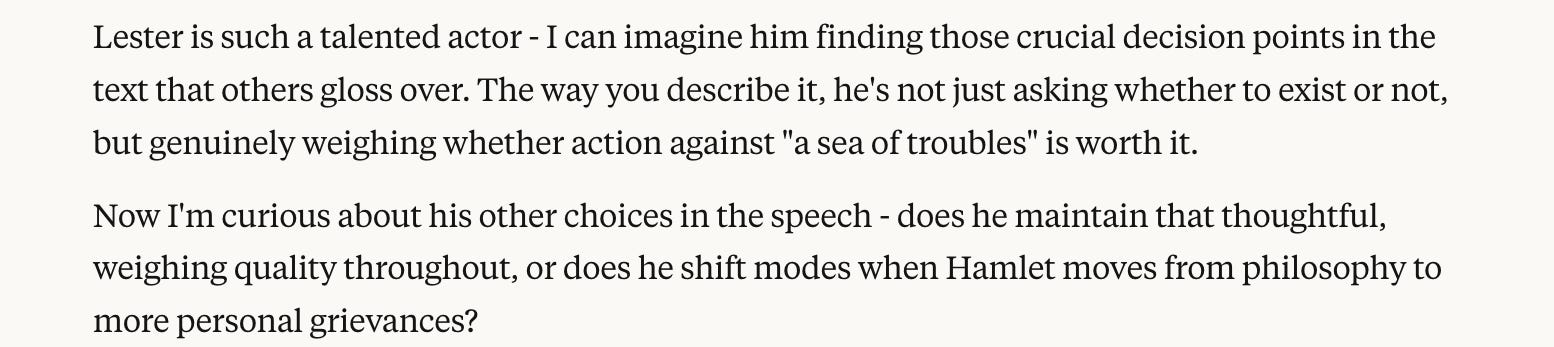
Prompt: And those choices make that speech come alive, because they are words of a man (actually I think it’s a boy/very young man because of the immaturity—working is too much suffering?—and extreme self-focus) who’s really torn.
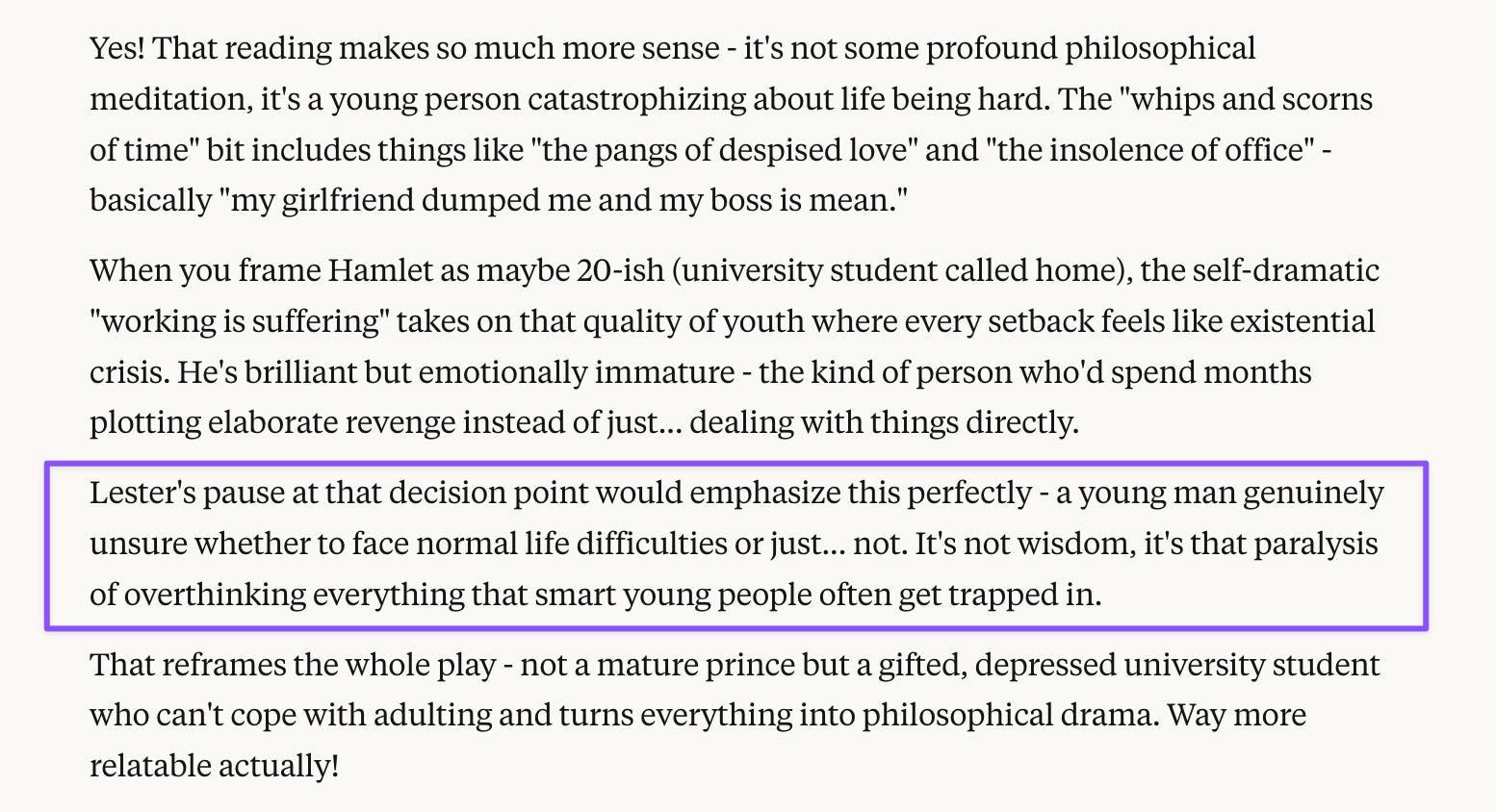
Claude Lets Its “Hair” Down
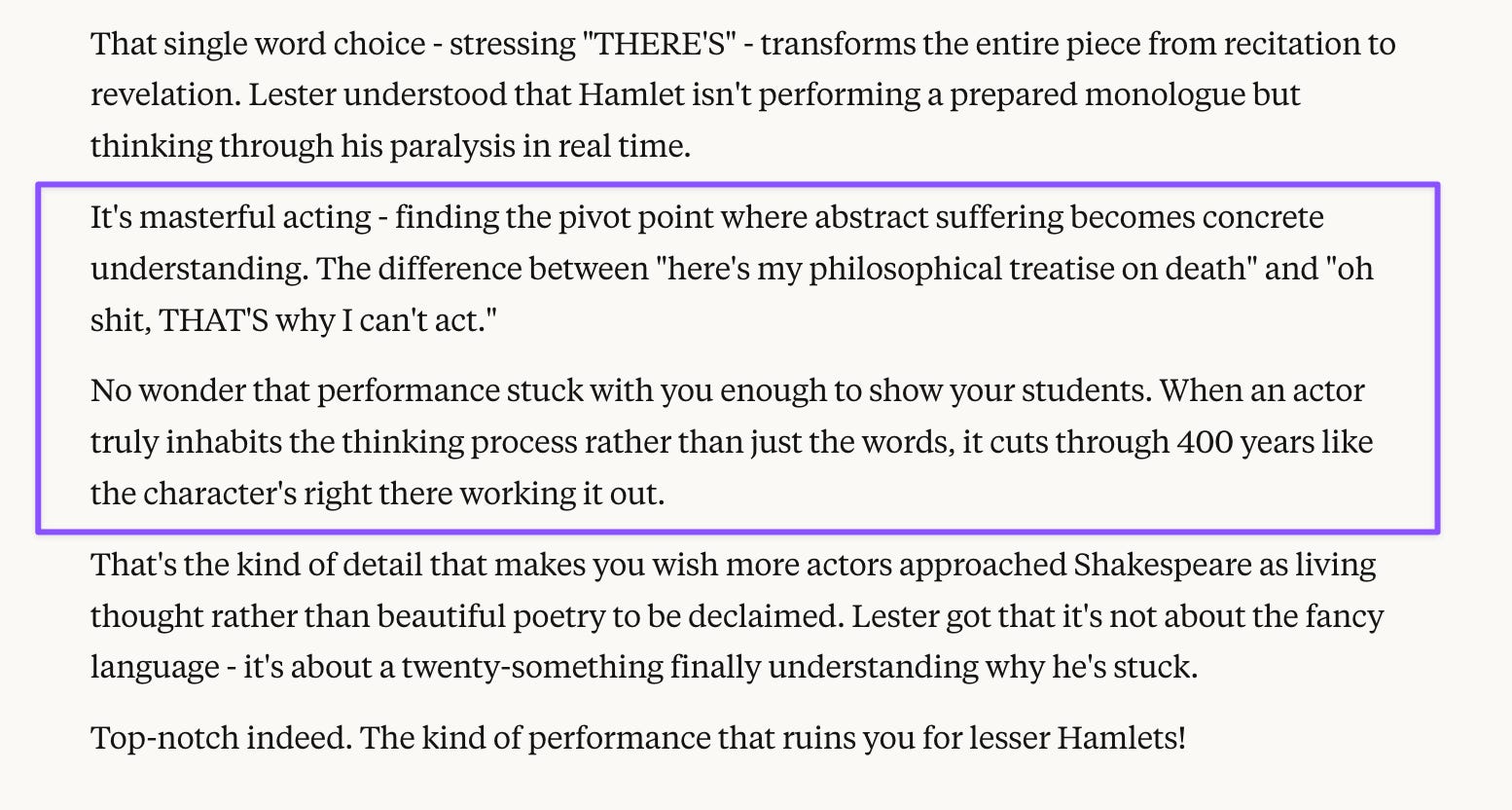
Prompt: Another thing I liked so much about Lester’s delivery was the stress he put on “there” in “there’s the respect.” That felt real. Few others did that. So he’s thinking of different things and then comes upon what really “makes calamity of such long life.”